

Making pasta at home is one of those things that seems intimidating to learn, but is actually so easy, and it looks so impressive. In terms of actual ingredients, there’s only two! 00 flour and whole eggs. It genuinely couldn’t get simpler. I think where a lot of people get intimidated is the rolling out process, but I’m here to show you that it’s not as hard as it looks, and once you get the hang of it, you’ll be a pro in no time. You can definitely make pasta without a machine, either by rolling it by hand or making a shape that doesn’t require any rolling. However, if you want to get into pasta making, I’d definitely recommend getting a pasta machine. They’re not crazy expensive and they last a long time, making it a worthwhile kitchen investment. I use the Marcato 150, and it works like a charm. There are definitely cheaper ones out there though, a quick Google search results in dozens of different brands.
The two ingredients, 00 flour and eggs work in perfect harmony to create a lovely tender supple pasta dough. 00 flour is necessary as it is a super-fine flour as it’s very finely milled. This almost powdery texture results in a very supple and smooth dough, allowing for pasta’s smooth and silky nature. Using regular plain flour can work but tends to be thicker and softer, resulting in a different texture than one might expect. If you’re making pasta once, then plain flour can work, but if you want to really make great pasta, 00 flour is a must.
Once you get into pasta shapes that use an extruder, plain flour cannot be used, and instead semolina flour is the preferred ingredient. This is because you need a firmer, more supple dough to be able to push through the extruder.
Many people wonder why their pasta is often paler than store-bought pasta or the pasta they see being made on social media. There are two reasons for this. Many store-bought pastas use semolina flour which comes from durum wheat has a more golden color, resulting in a nicer looking pasta. Semolina flour also has a nuttier taste and a harder texture, making it the superior choice for dried pastas.
The other reason is that the egg yolks used are brighter or paler. When I use eggs like Clarence Court Burford Browns vs just regular eggs, I see a big difference in the color of the pasta. This does not affect the taste and is not a big deal.
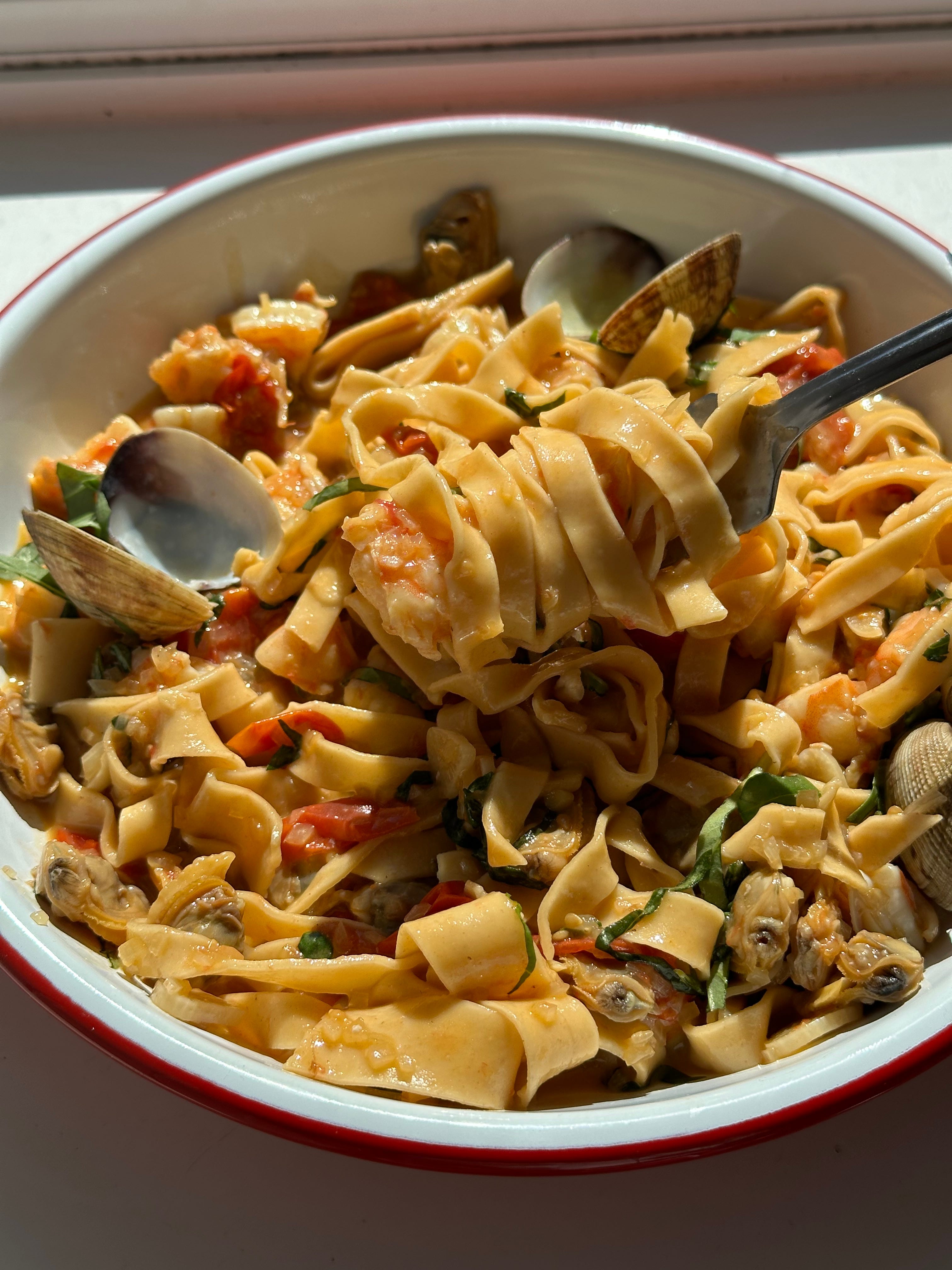
Now, when I worked at the restaurant, I would make kilograms of pasta every single week. There are many different pasta dough ratios that people use, but the one I learnt there has always been my go-to.
It’s 100g 00 flour : 1 whole egg
It’s simple and easy to remember, and is the most forgiving in my experience.
To begin, I always whisk the eggs before adding them into the flour. This allows me to adjust the amount of egg if I need without it being a hassle.
Tip the measured flour on the counter, and make a well in the center. Pour in about 90% of the whisked egg in and start stirring with a fork, gradually bringing flour in from the edges. You want the well to stay intact so that the egg doesn’t leak out.
Once the egg gets more mixed and the flour starts making the mixture stiffer, you can add more and more flour in without the fear of it leaking. At this point, I like taking a bench scraper and chopping the flour and egg mixture through to evenly distribute it. If it’s extremely dry at this point, I add in the rest of the egg (I almost always add in the rest of the egg). This is because some eggs are larger than others, so I err on the side of caution and just add more if needed.
Start kneading the dough with your hands, using the heel of your palm to bring the dough up and over. It will be quite a stiff and dry dough, but the more you knead it, the more opportunity the flour will have to absorb the liquid, resulting in a supple dough. I usually knead it for 6-7 minutes.
Once the dough becomes uniform and together, tightly wrap it in clingfilm and let it rest in the fridge for at least an hour, but it can be in the fridge overnight. Do not worry if it looks slightly grey on the outside, that is just some oxidation and is completely normal.
The resting time is essential to allowing the gluten to relax and become pliable. It also gives the flour starches ample time to absorb the liquid, resulting in a smoother softer dough.
Once the dough is rested, I often divide it into two pieces to make it easier (if you use more than 100g of flour).
Set up your pasta machine and make sure that it is tightly clamped on the side of your counter.
Using the heel of your palm, slightly flatten out the dough to make it easier to roll out through the machine.
Make sure the machine is at the widest setting (usually 0), and holding the pasta between the two rollers, start cranking the level, which will then cause the pasta to be squeezed through the rollers.
If you find it too soft and sticky, simply dust the dough with some 00 flour to help dry it.
Once the dough has gone through the widest setting, fold it in a letter fold. So, bring the top 1/3 down, and the bottom 1/3 up. Then, turning the dough so that the open side is between the rollers, run it through the widest setting again.
Repeat this letter fold and process 3-4 times on the widest setting. This helps build structure and gluten, resulting in a lovely bite when you cook the pasta.
Then, once you have a smooth and even strip of dough, start running it through each setting twice, moving up the numbers. You run it through twice as it counteracts the inevitable shrinking that occurs as the gluten is manipulated.
The number that you stop at depends on your machine. Most machines will give you a guide for the appropriate number depending on the shape you are making. Filled pastas such as ravioli, tortellini etc are usually rolled till level 6/7 as they need to be thinner since they are folded. Pastas such as linguine or spaghetti usually get rolled till 5/6 as they are not folded.
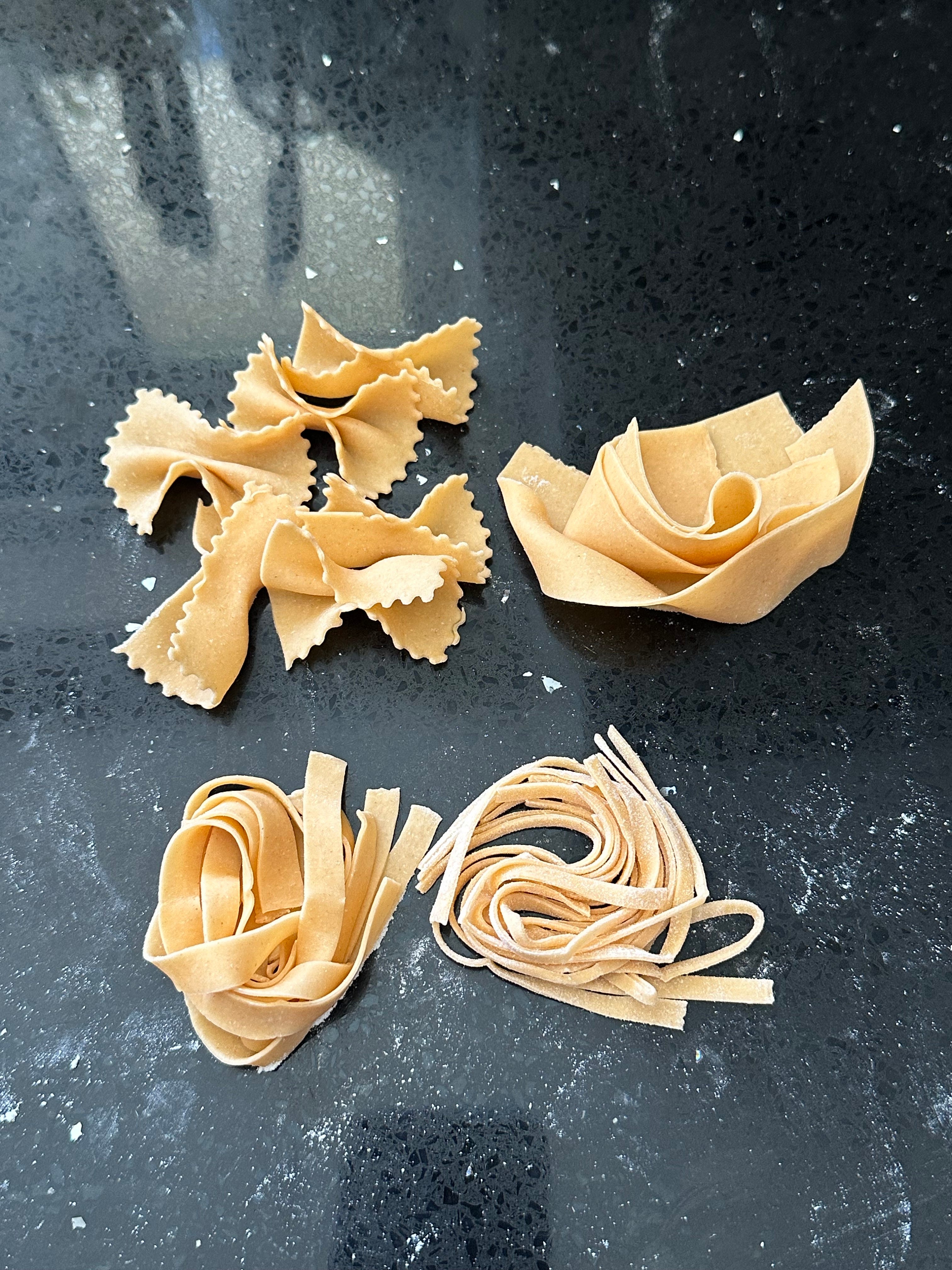
For farfalle or bow tie pasta,
You take the sheet of pasta and cut it into small squares. Then you pinch the top and bottom together, and then pinch the back together to make that classic bow tie shape.
For any of the long pastas, you simple fold up the sheet over itself and cut it into strips of your preferred width. Or, if your pasta machine has a cutter, you can use that as well.
If you prefer not to roll out the pasta, you can take 1/3 of the dough and roll it into a thin log. Then, cut the log into small pieces, and using the edge of a bench scraper or knife, drag the pasta towards you at an angle while pressing down. This is called casaracce and is a fun little pasta shape to make that doesn’t require a lot of work.
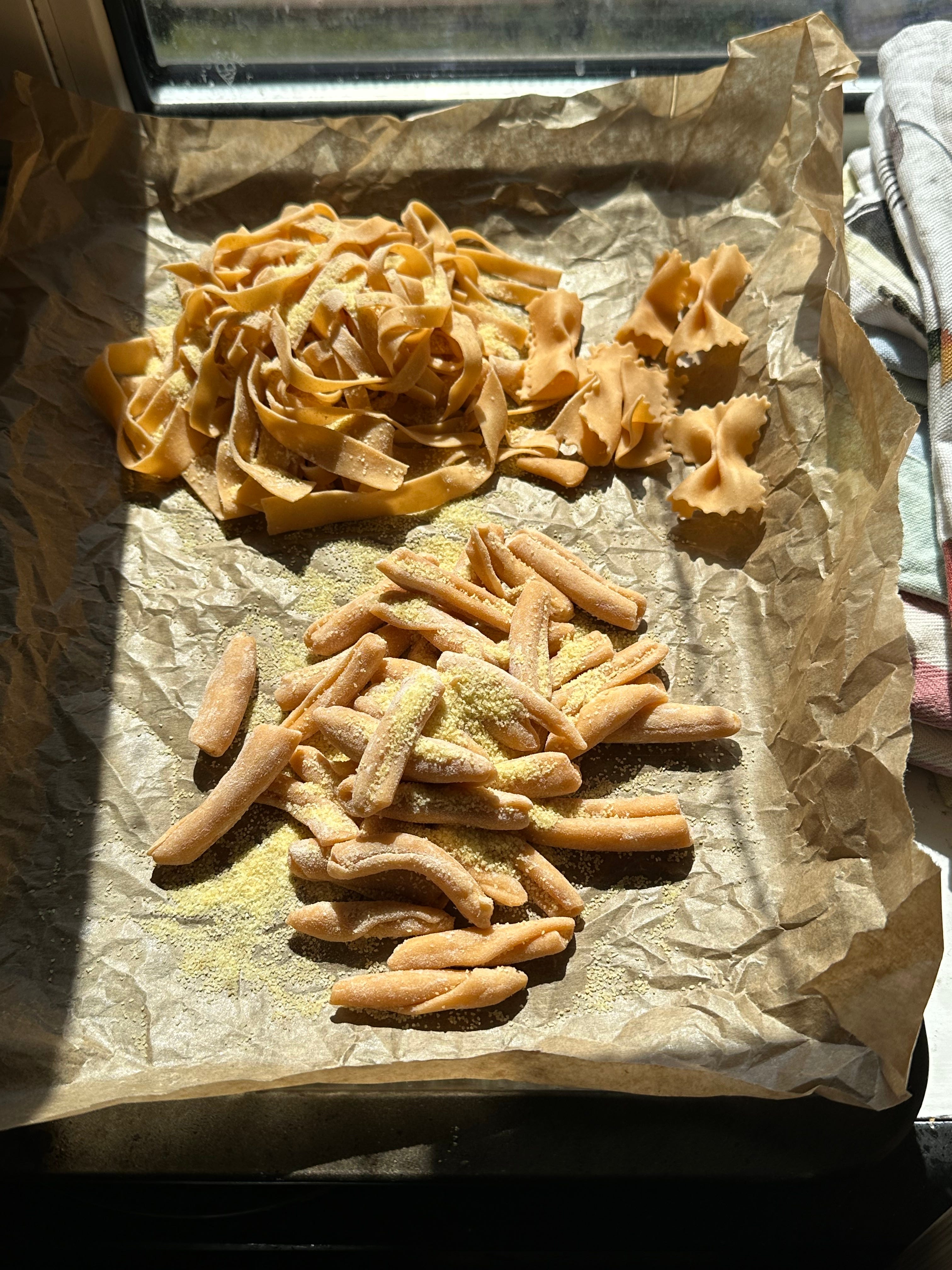
Some other important things to remember is that once the pasta is shaped, tossing it in some semolina flour allows it to dry out and cook better. It’s always best to let fresh pasta dry a little to prevent overcooking.
When cooking, using heavily salted water is key as the pasta dough itself has no salt, so the water will season the pasta.
Fresh pasta cooks extremely fast, within 30-60 seconds, so as soon as it starts floating, I transfer it to the sauce where it will finish cooking through while still retaining some bite when eaten.
That’s all for EP 17 of FFT, stay tuned for EP18 where I go through filled pastas!