

In a kitchen, stock is the most prized possession. Often referred to as liquid gold, this gelatinous and collagen-heavy liquid forms the base of most sauces and dishes.
There’s many different types of stocks you can make, from chicken to veal, pork, turkey, fish, seafood, veg etc. You can make a stock from any type of bones, and the flavors vary immensely depending on the type.
In this episode, we’ll be discussing white and brown chicken stock. Oftentimes, restaurants will make a chicken & veal stock as veal bones are particularly high in collagen and flavor. However, veal bones aren’t super accessible to most people, so I decided to focus on a chicken broth so that all of you feel comfortable making it.
White and brown stock differ in both color and flavor- and can be used for similar and different purposes.
For a white stock, raw bones and vegetables get simmered in water until a light golden color is achieved. The Maillard reaction occurs, but at a slower less intense rate.
For brown stock, the bones get roasted hard and fast to get a gorgeous golden color, initiating that Maillard reaction and allowing the amino acids and sugars to develop those flavor compounds. Then, they’re simmered with veggies and aromatics low and slow to extract all the flavor and collagen, resulting in a decidedly stronger tasting product.
There is truly nothing like a perfectly made stock, and being able to do is the hallmark of someone who respects food and the effort that goes behind it.
My recommendation is to dedicate a day once a month to this. Make a big batch, freeze it, and have it for whenever you need it.
I like freezing the white stock in a 2-liter container and then cutting it into large blocks once frozen. That way, I can just chuck a block into any dish I need.
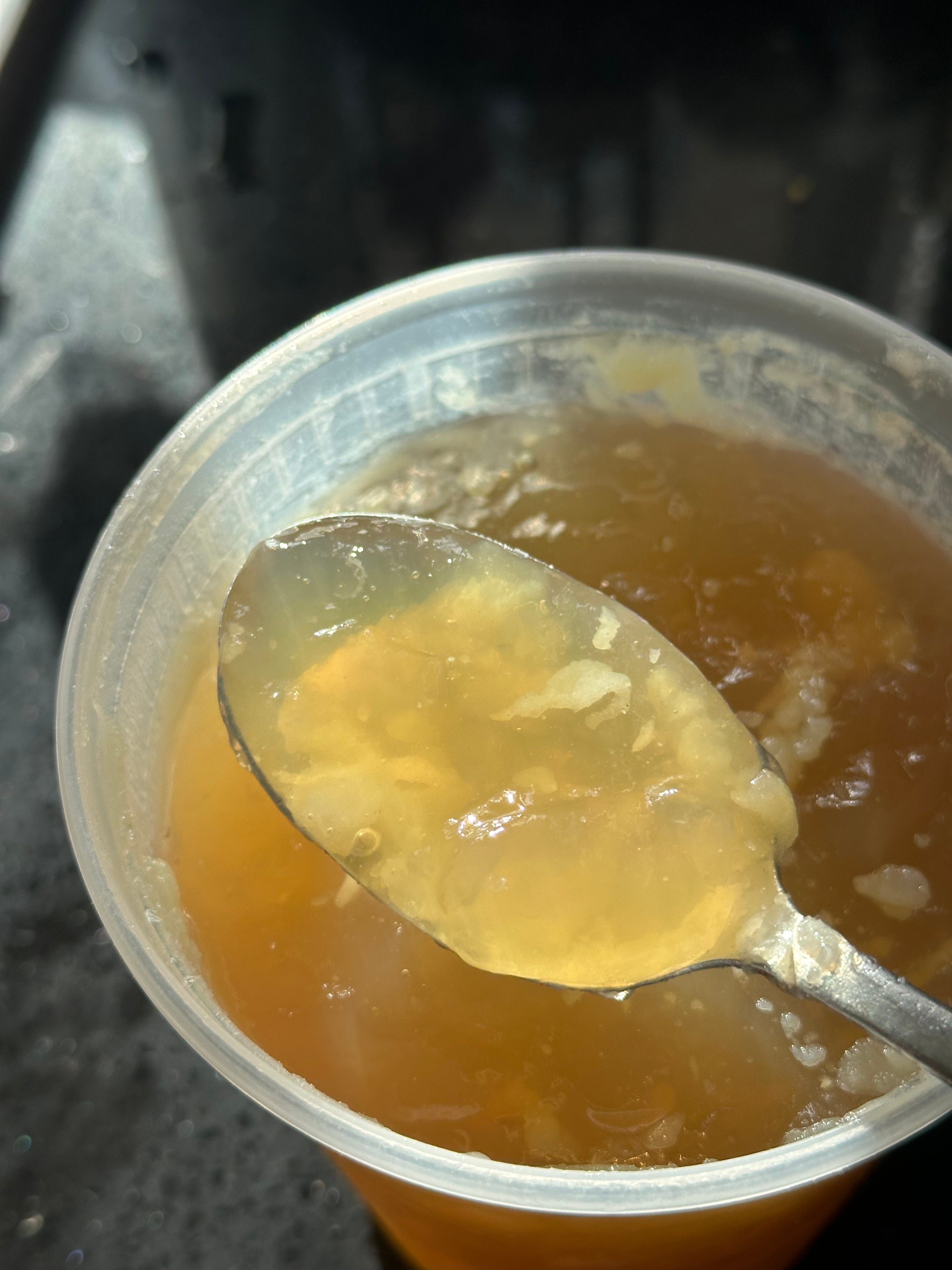
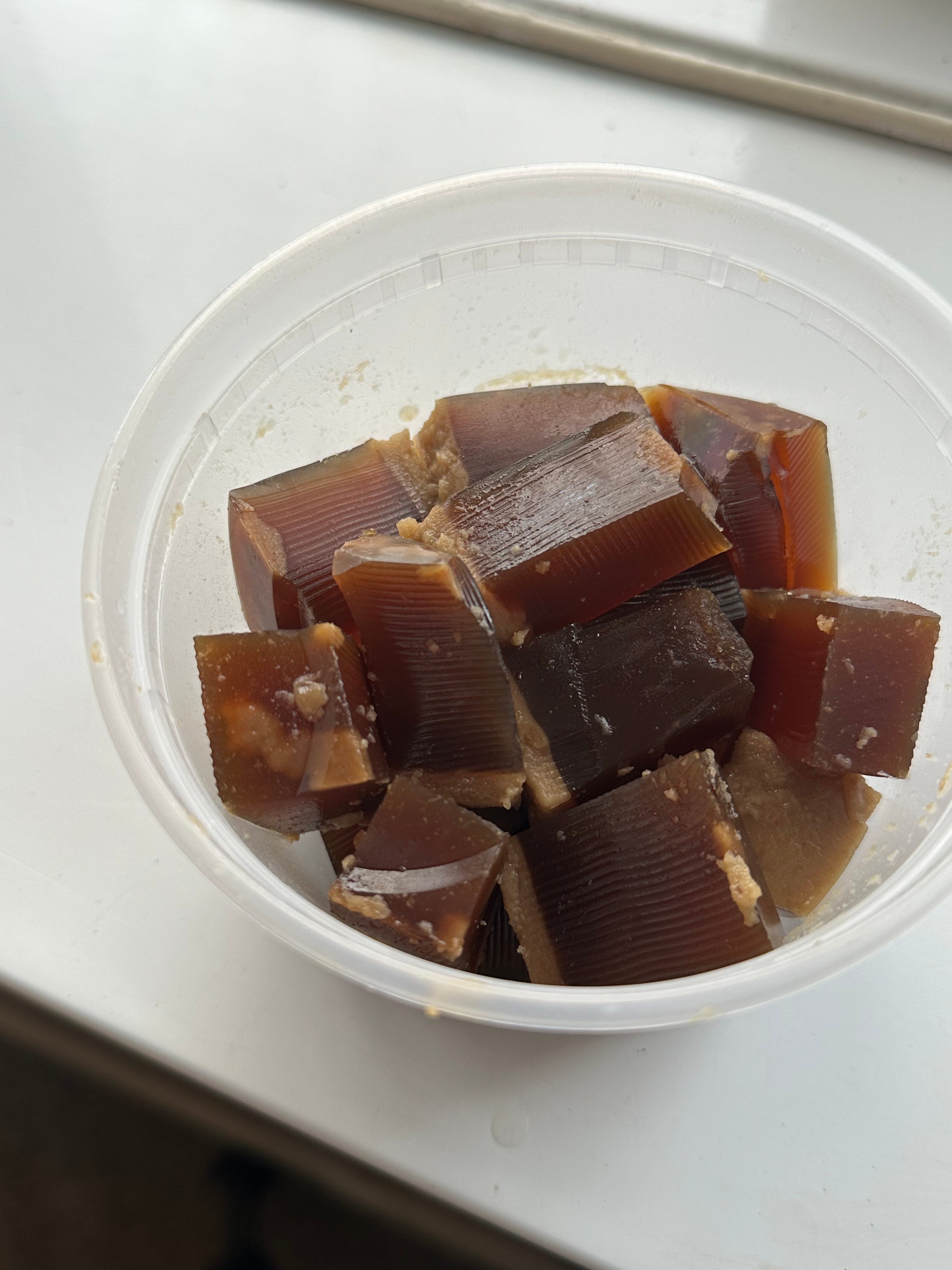
For the brown stock, I like reducing it down by 1/16th to create a sort of jus/glace which then turns into a jelly when refrigerated. From there, I cut into small cubes and freeze them. That way I can just pop a cube into some hot water and I have intense brown stock! It’s like my own homemade stock cube.
Here are all the rules you need to remember:
The difference between a light stock and dark stock.
A light stock is one made with raw bones and veggies. There is no prior cooking before it is placed in the water and simmered. It is simmered for 2-4 hours and has a lighter and milder flavor. This is usually done with chicken bones but it can also be done with any type of bones.
A dark/brown stock is when the bones and vegetables have been caramelized. This is often done by roasting them at 220 C or 425 F. It it roasted without any additional oil as that can cause a greasy stock. It is important not to burn it as that will impart a bitter taste to the stock. Once the bones and veggies have a nice color to them, they are then simmered for 4-6 hours. The color is much darker, and the flavor is deeper/more complex.
Always trim any excess fat from bones and avoid using any additional oil/fat. A hallmark of a good stock is a clear and distinct taste. Excess oil can make a stock cloudy and greasy.
The best bones for this are the ones with the most collagen and cartilage. So, things like feet, neck, wings, shoulder etc. All the collagen and cartilage will break down and result in that jelly-like consistency. If you’re adding beef bones, veal bones are particularly high in collagen and will result in a very gelatinous stock.
Any water that is added should be cold. Hot water will melt the fat and cause a cloudy broth. Cold water will solidify the fat and impurities and help bring it to the surface, where it can be skimmed off.
Every 30-45 minutes, a small amount of cold water should be added to release any impurities. You should then skim the fat and impurities off the surface. This is called depouiller and should be done periodically.
Never let the stock come to a roiling boil. That causes cloudiness and an unclear taste. A simmer with a few occasional bubbles at the surface is ideal. However, you don’t want there to be NO movement, as this means the flavor isn’t being extracted.
The common vegetables used are carrots, celery, and onion. Stay away from very pungent aromatics such as ginger, garlic, peppers, etc. This will cause your broth to be very strong and not have a neutral base as designed. You can add these aromatics in when making specific dishes. Also, don’t cut your vegetables too small- you don’t want them to break down and make a cloudy stock. Larger chunks are ideal for stock making. Mushrooms are a great addition as they act as natural sponges and will soak up any excess fat.
Don’t use starchy vegetables such as potatoes. These will break down and make your stock cloudy and gloopy.
When using herbs, make sure to only use the stems. The leaves will color the stock green.
Don’t add salt to your stock. Since stocks are often reduced in individual dishes, they will become too salty by the end as the liquid-to-salt ratio decreases.
OK. I think that’s all of them. I had to really think back to what I learned in school and the restaurant.
Now, let me show you how I make my stock! I do a brown chicken stock, but I don’t caramelize the vegetables as I prefer a fresher taste.
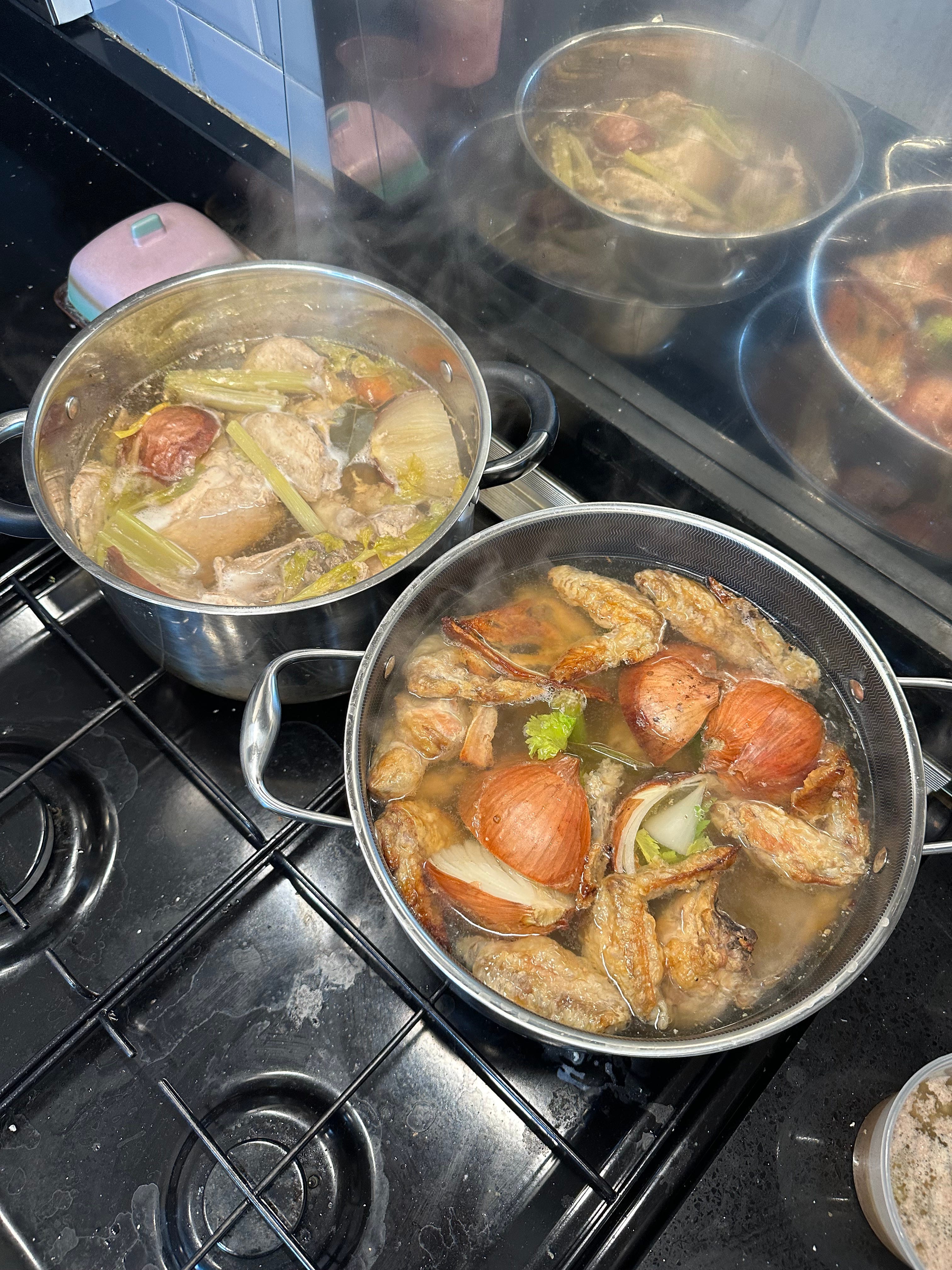
Ingredients:
2 chicken carcasses, cut in 1/2
1 packet of chicken wings/feet
2 onions, halved
2 carrots, peeled and cut in large chunks
2 celery sticks, cut in large chunks
2-3 button mushrooms
8-10 parsley stalks cut in half (no leaves)
1 bay leaf
6-7 peppercorns
Method:
Preheat your oven to 220 C or 425 F. Take all of the bones and trim any excess skin/fat. Place in a baking sheet and put in the oven. Roast until a deep, dark golden color, usually around 60-70 minutes. Flip it halfway through so both sides get color.
In the meantime, prep your vegetables.
When roasted, put the bones in a large stockpot, making sure not to get any excess fat from the baking sheet in the pot.
Cover completely with cold water and put on high heat.
When the stock comes to a simmer, turn the heat down to low and add in some cold water. The exact amount doesn’t matter, just around 1 cup/250 ml.
Skim any of the impurities from the top of the stock into a bowl. I like keeping a bowl and a slotted spoon on the side for this. Add in all the vegetables along with the bay leaf and peppercorns.
Keep the stock at a simmer (a few small bubbles breaking the surface of the stock) for 4-6 hours.
Add in cold water every 30-45 minutes and repeat the skimming process.
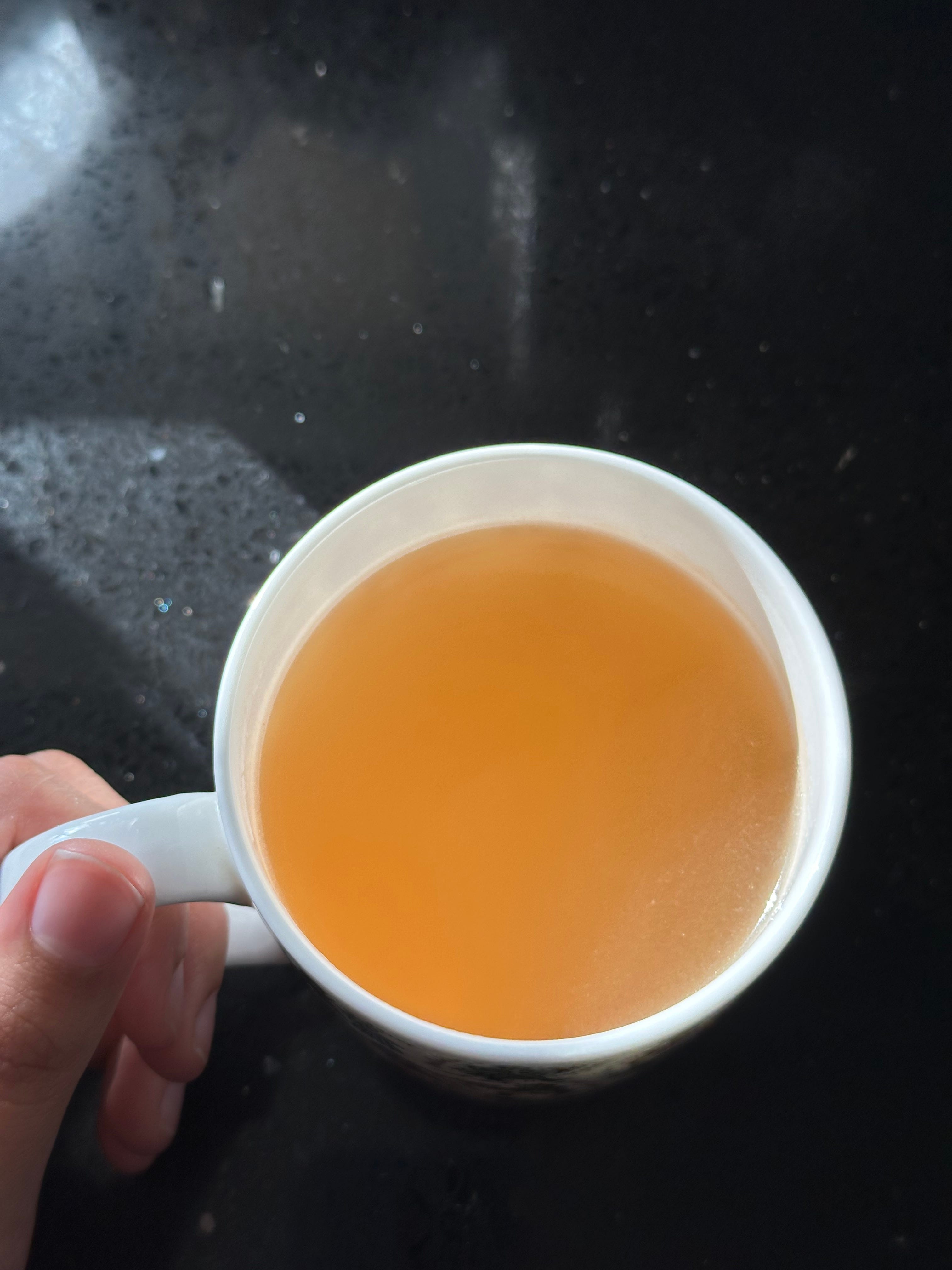
After 4-6 hours, the stock should be a deep golden color and extremely fragrant.
(If you want to make a white stock, skip the roasting step and just put the bones straight in a pot and cover with cold water. Follow all the following steps and simmer for 3-4 hours instead)
Put a sieve on top of a large bowl, and sieve the stock in. Don’t press the chicken bones and veggies to get more stock- you will just create a cloudy broth. Let it drain naturally as it filters through. I like sieving the stock through a medium colander first and then sieving again with a fine mesh strainer to catch any impurities.
If you want to create small stock cubes, put the stock back in the pot and turn the heat to high. It should come to a roiling boil, and you are looking for the stock to reduce a significant amount without burning. I reduce it by approximately 1/16th, but a good indicator that it is adequately reduced is when you can coat a spoon with it and when you drag a finger through the stock on the spoon, the parting stays. This means that it has reduced to a thickened glaze (jus/glace), and has intensified in flavor as you have evaporated any excess moisture.
Let the broth cool completely before storing it in a container and refrigerating overnight.
The next day, tip the mixture out (it should be a very firm sliceable jello consistency, if it’s not it hasn’t been reduced enough), and cut into small cubes.
Keep frozen and when you want to use them, melt it in hot water as needed. It will turn into a very balanced and flavorful stock that you can add into sauces, stews, braises, soups, or just drink on it’s own!
I hope that was helpful! See you next week for Episode 9 of FFT :)
Laila xx
Hi! This was so helpful! I love the idea
Of having stock cubes - about how much water per cube would you say when you’re using them? One cube per cup of water? More or less? Just want to make sure I don’t dilute them too much after all that!
Hi! I'm new to your page and I really like the content that you're posting! What do you usually do with the leftover chicken from the stock?